
Scrum: Unlocking Agile Excellence in Project Management
6 min readBy Aerotix
Scrum is an Agile project management framework focused on iterative development and collaboration. It breaks projects into short iterations called sprints, allowing teams to deliver incremental value quickly.
Scrum practices include daily meetings, sprint planning, reviews, and retrospectives, promoting adaptability and transparency throughout the project lifecycle.
Although the term “Scrum” was initially coined in 1986 within the Agile context, its origins lie in the sport of rugby, where players form a tight-knit huddle, known as a “scrum,” to gain possession of the ball and advance towards the goal line.
Characteristics pivotal in propelling the Scrum forward:-
Built-in Instability: Scrum teams thrive amidst challenging requirements, fostering an environment of tension essential for executing strategic projects.
Self-organizing Teams: Operating akin to startups, Scrum teams exhibit autonomy, continuous growth, and collaborative synergy devoid of hierarchical constraints.
Overlapping Development Phases: Team members synchronize their paces to meet deadlines, eventually converging into a collective momentum.
Multi-learning: Embracing a culture of trial and error, Scrum teams stay abreast of evolving market dynamics, enabling swift adaptability.
Subtle Control: Despite the autonomy, Scrum teams implement checkpoints to analyze progress, striking a balance between creativity and structured oversight.
Organizational Transfer of Learning: Encouraging a culture of skill acquisition and knowledge sharing among team members fosters continuous improvement.
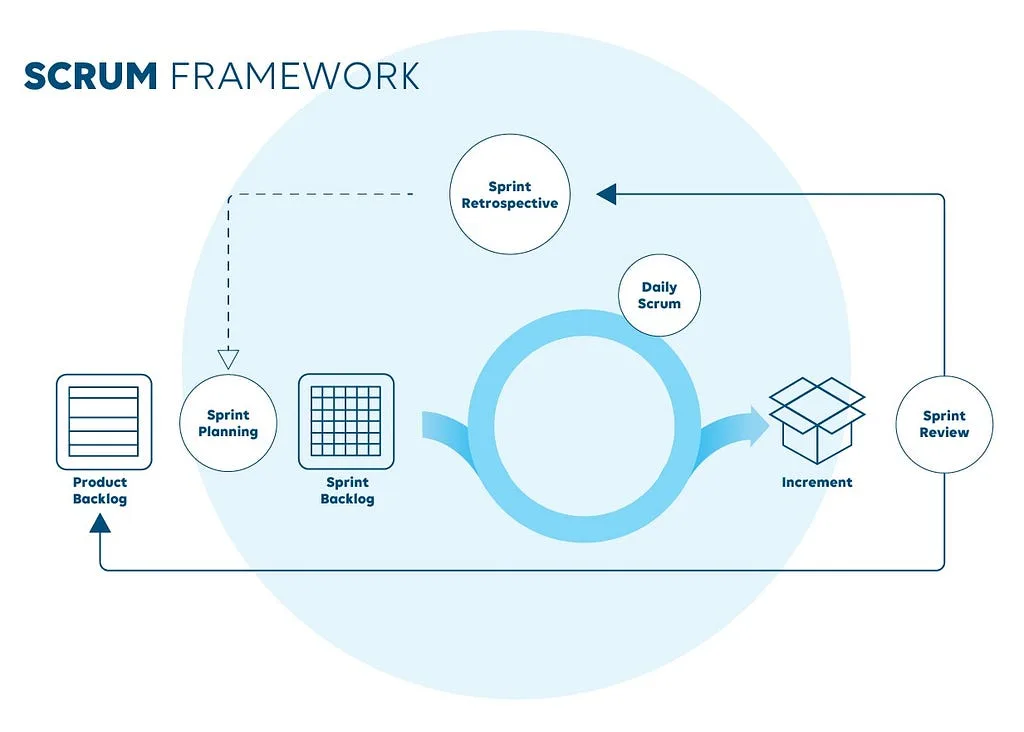
The essence of Scrum and its significance in modern project management practices:-
Values and Principles: Founded on the Agile Manifesto, Scrum values individuals and interactions, working software, customer collaboration, and responding to change.
Key Roles: The Scrum framework includes roles like the Product Owner, Scrum Master, and Development Team, each with distinct responsibilities in driving project success.
Time-Boxed Sprints: Scrum operates on fixed-length sprints, typically lasting one to four weeks, allowing teams to focus on delivering a specific set of features or increments.
Sprint Planning: At the start of each sprint, the team conducts sprint planning to define the sprint goal and select the work to be done.
Daily Stand-up Meetings: Daily stand-up meetings facilitate communication, synchronization, and collaboration among team members, helping to identify and address obstacles.
Sprint Review and Retrospective: At the end of each sprint, the team presents completed work during the sprint review and conducts a retrospective to reflect on successes and areas for improvement.
Continuous Delivery of Value: Scrum emphasizes delivering value to the customer early and often, prioritizing features based on their business value and enabling frequent feedback loops.
Iterative and Adaptive Approach: Scrum enables teams to adapt to changing requirements and market conditions, fostering a culture of continuous improvement and learning.
Effective Collaboration: By providing a framework for effective collaboration, Scrum helps teams manage complexity, drive innovation, and deliver high-quality products in a dynamic and fast-paced environment.
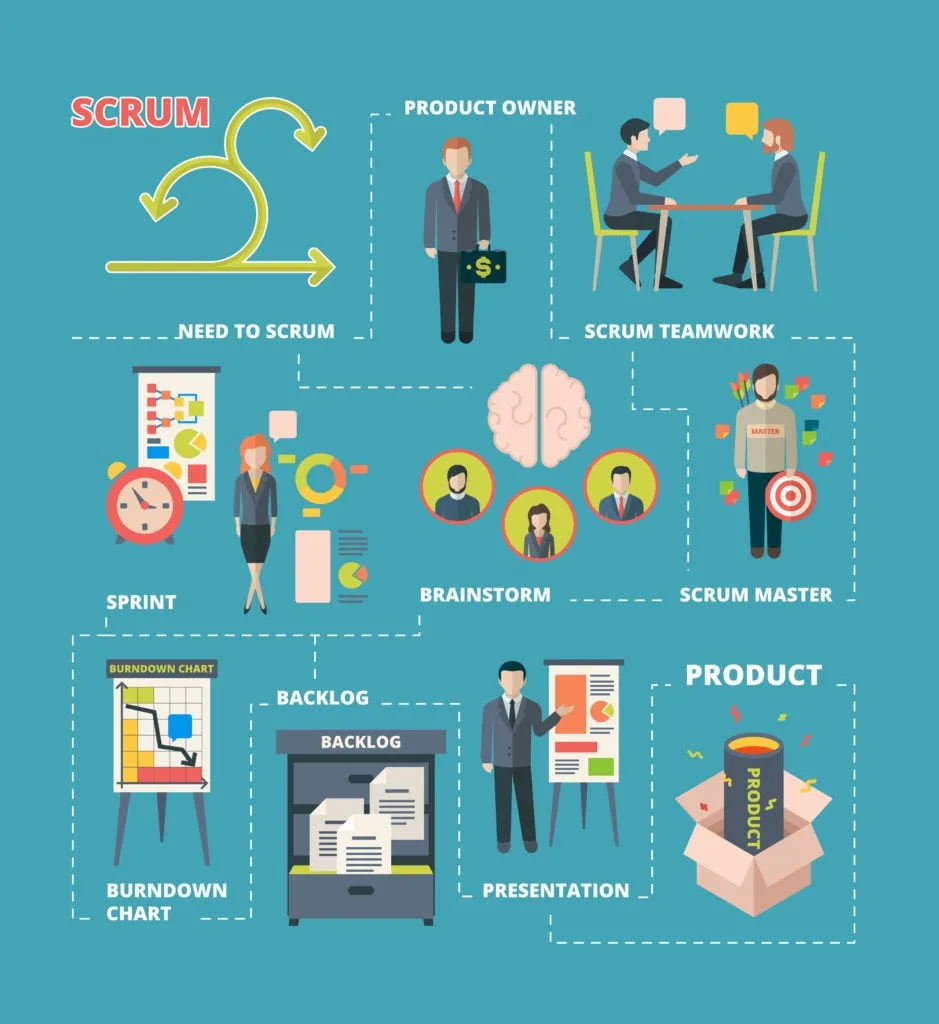
Navigating the Scrum Cycle: Key Roles and Iterative Development
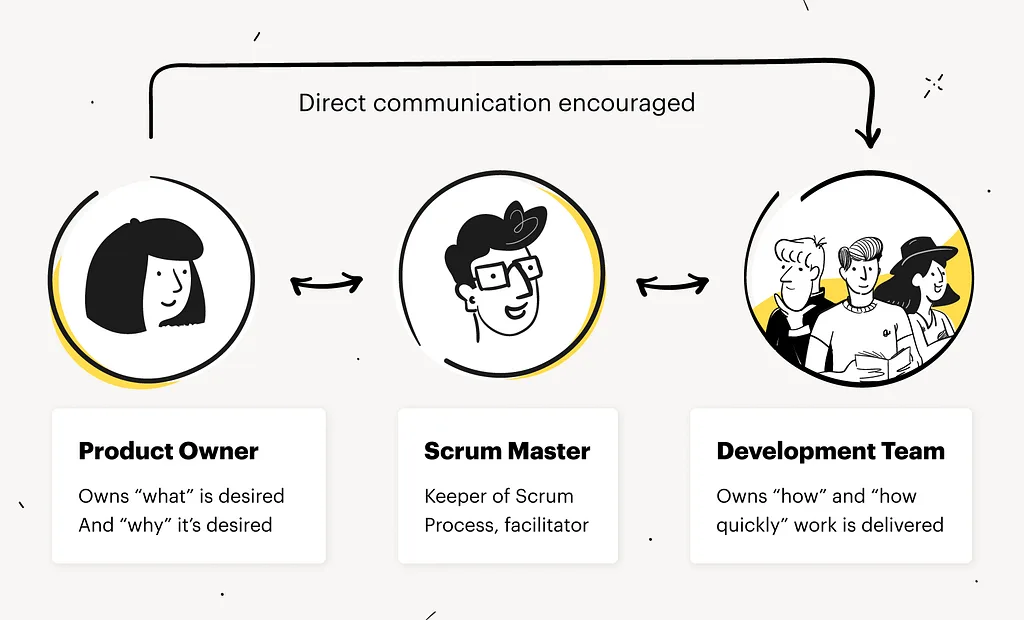
Key roles in Scrum refer to the specific positions within the foundation of the Scrum framework and collaborate closely to ensure the success of the project. Each role has distinct responsibilities but works together towards a common goal of delivering value to the customer iteratively and efficiently.
These roles include:-
Product Owner: Represents the stakeholders, defines the product vision, and prioritizes the product backlog items.
Scrum Master: Facilitates the Scrum process, removes impediments, and ensures that the team adheres to Scrum principles and practices.
Development Team: Cross-functional team responsible for delivering increments of the product during each sprint.
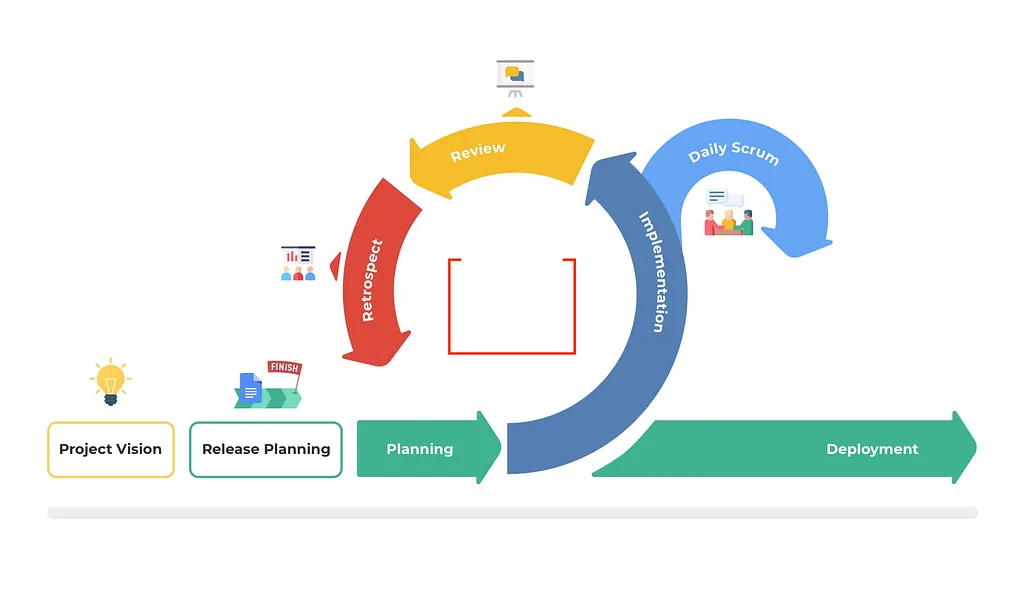
The Scrum cycle, also known as the Scrum process, is a recurring series of events and activities that occur within each sprint. It follows a structured framework designed to promote collaboration, transparency, and iterative development.
The Scrum cycle typically includes the following phases:
Sprint Planning: At the beginning of each sprint, the team conducts sprint planning to define the sprint goal and select the work to be done. The Product Owner presents the highest-priority items from the product backlog, and the team collaborates to agree on which items they can commit to completing during the sprint.
Daily Stand-up Meetings: Throughout the sprint, the team holds daily stand-up meetings, also known as daily scrums, to synchronize activities, discuss progress, and identify any obstacles or impediments. Each team member answers three questions: What did I accomplish yesterday? What will I do today? Are there any impediments blocking my progress?
Sprint Execution: The development team works collaboratively to complete the tasks defined in the sprint backlog. They use Agile practices such as continuous integration and test-driven development to deliver working increments of the product throughout the sprint.
Sprint Review: At the end of the sprint, the team holds a sprint review meeting to demonstrate the completed work to the stakeholders and gather feedback. The Product Owner presents the product increment, and stakeholders provide input on its functionality, usability, and any changes or enhancements required.
Sprint Retrospective: Following the sprint review, the team conducts a sprint retrospective meeting to reflect on their performance and identify areas for improvement. They discuss what went well, what could be improved, and any action items to implement in future sprints.
Incremental Delivery: Throughout the Scrum cycle, the team delivers incremental value to the customer by completing and delivering working increments of the product. This iterative approach allows for frequent feedback and enables the team to adapt to changing requirements and priorities.
Product Backlog Refinement: Outside of the sprint cycle, the Product Owner continuously refines and prioritizes the product backlog based on feedback from stakeholders and changes in the market. This ensures that the team is always working on the most valuable and relevant items.
Harnessing the Power of the Scrum Board
A Scrum board is a visual representation of the work being done by a Scrum team during a sprint. It provides transparency into the progress of tasks and helps the team to manage their work effectively.
The board includes:-
Backlog: This column represents the backlog items, often user stories or tasks, that have been identified and prioritized for future sprints.
Stories: Once a backlog item is selected for a sprint, it moves to the “Stories” column, indicating that it has been broken down into specific tasks or sub-tasks.
To Do: Tasks or user stories that are ready to be worked on by team members are moved to the “To Do” column.
In Progress: Tasks or stories that are currently being worked on by team members are moved to the “In Progress” column.
To Verify: Once a task or story is completed, it moves to the “To Verify” column, where it awaits review and verification by relevant stakeholders or team members.
Done: Finally, once a task or story has been reviewed, verified, and meets the acceptance criteria, it is moved to the “Done” column, indicating that it is completed and ready for deployment.
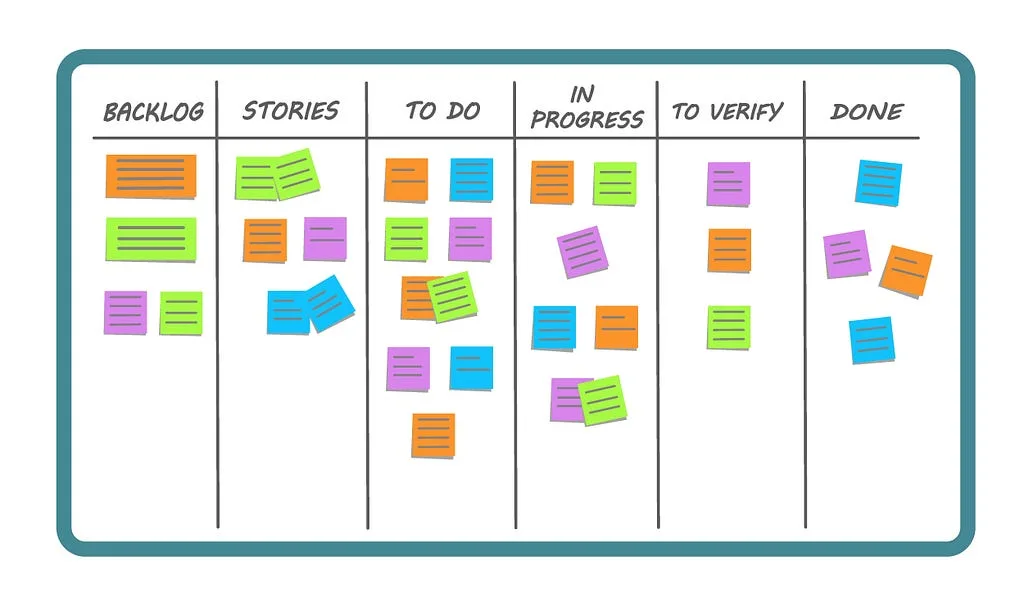
Incorporating a Scrum board enhances project management by providing a clear and structured approach to task management. From backlog prioritization to final deployment, each column represents a distinct stage in the sprint cycle, ensuring transparency and accountability throughout the process.
By visualizing the progress of tasks and stories, teams can easily track their work, identify bottlenecks, and adapt their approach as needed. Ultimately, a well-implemented Scrum board fosters collaboration, efficiency, and successful project delivery in Agile environments.
You may also refer to the other articles to ensure comprehensive familiarity with the information provided.